European Portuguese · listening practice
Catch Portuguese numbers the first time.
Five minutes a day of listening practice for prices, phone numbers and dates, in European Portuguese, not Brazilian.
- No sign-up
- No ads
- Works on your phone

European Portuguese · listening practice
Five minutes a day of listening practice for prices, phone numbers and dates, in European Portuguese, not Brazilian.

The problem
At the till, the cashier says “são doze e oitenta e cinco” at full speed, and you hand over a €20 note just in case. On the phone, someone reads out their number and you catch the first three digits.
Spoken numbers are the first thing you need in Portugal and the last thing your ear catches. And most apps teach Brazilian Portuguese, which sounds quite different: European Portuguese swallows its vowels, so the same number can be hard to recognise.
How it works
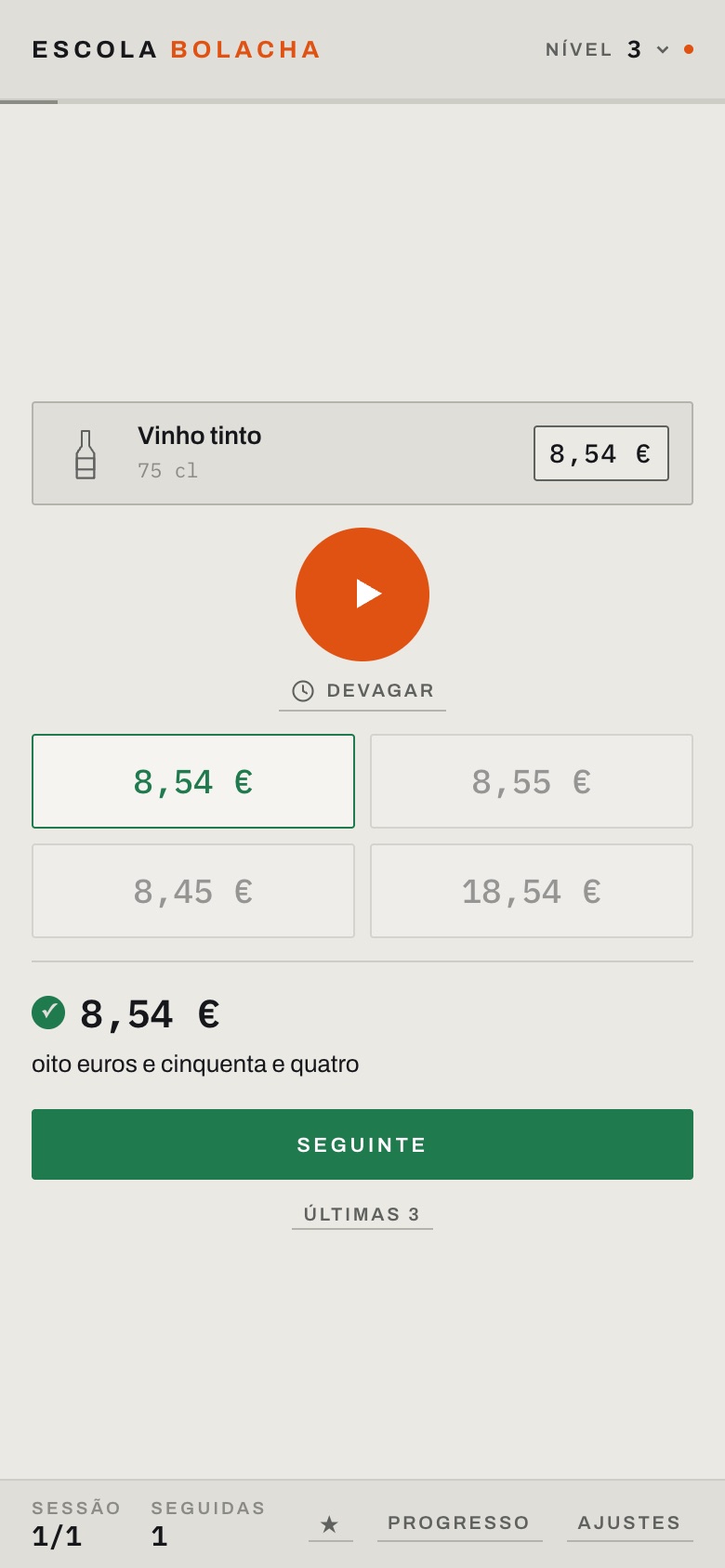
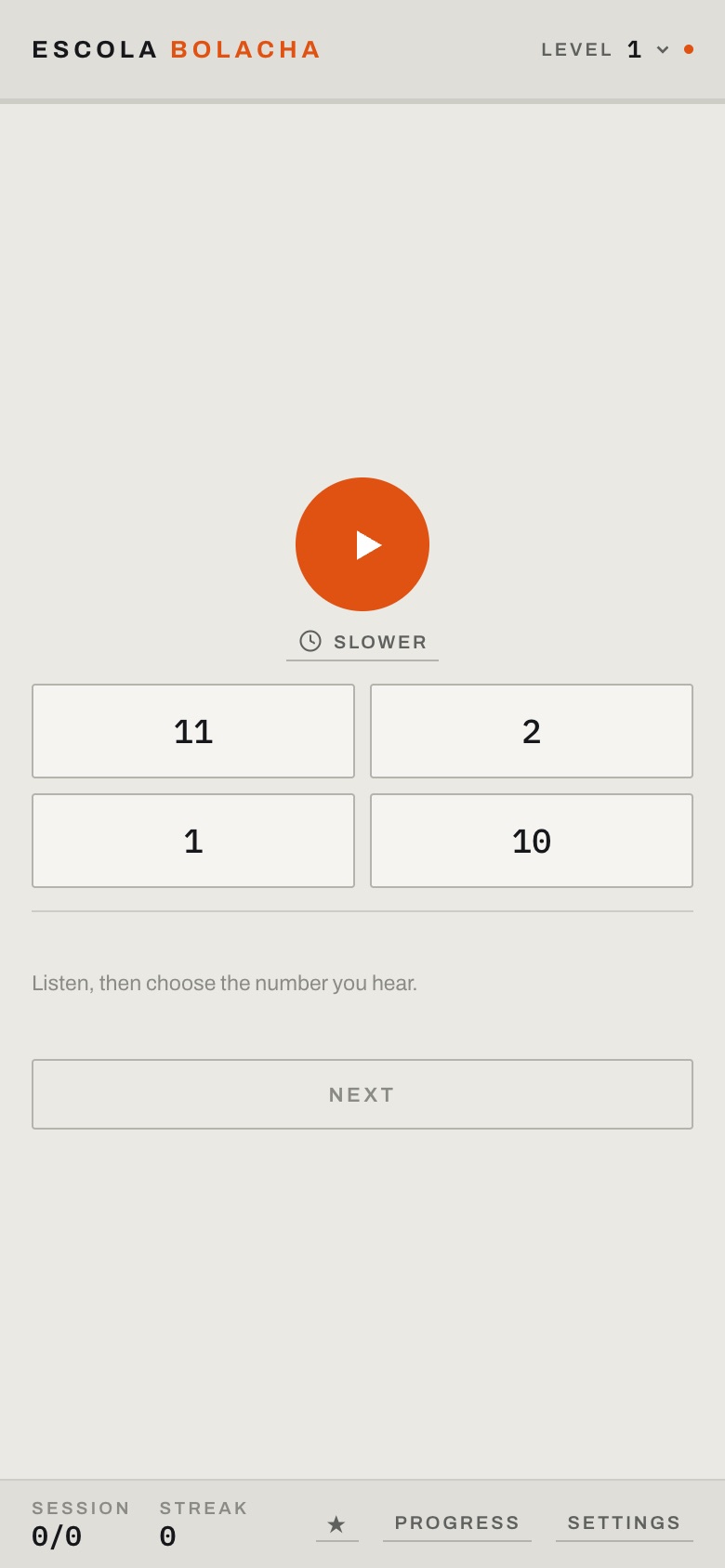
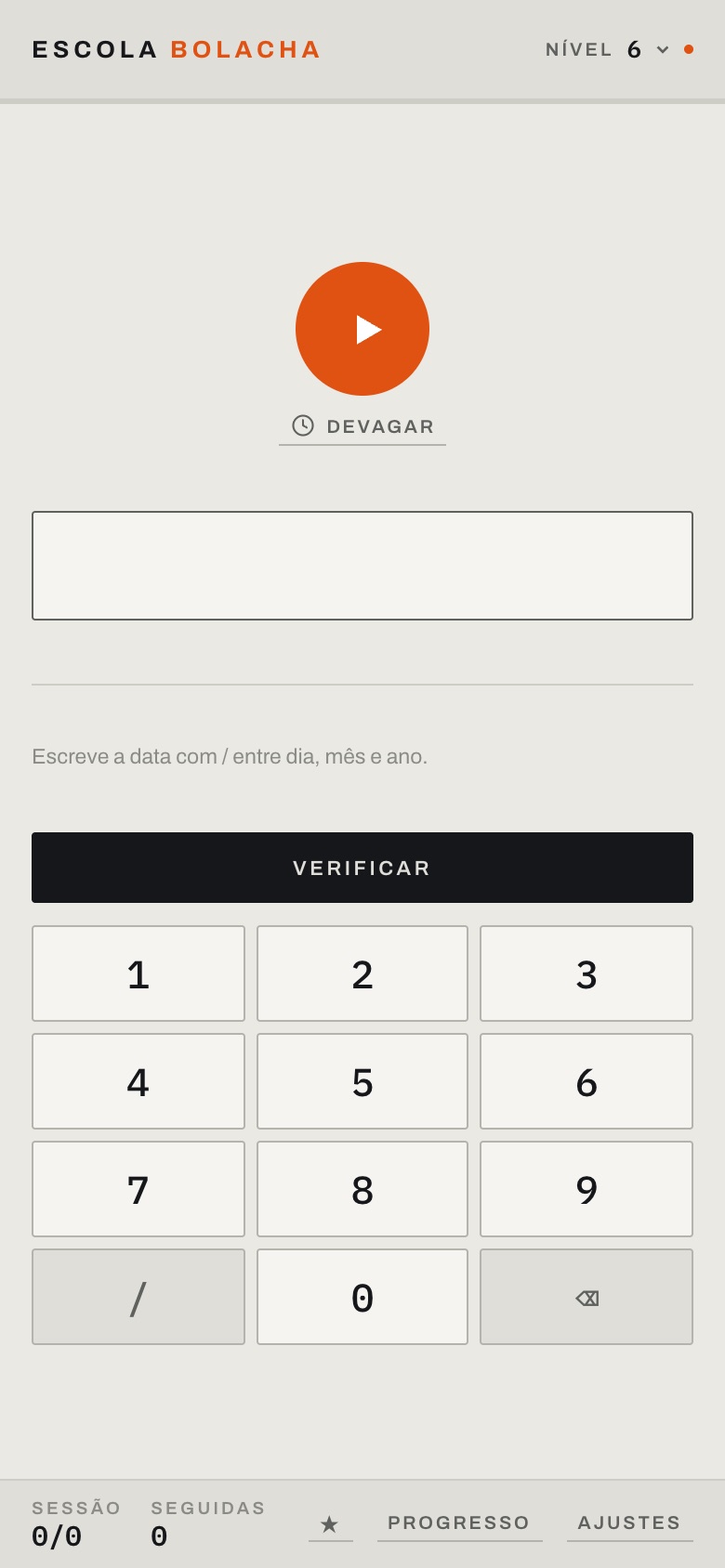
A Portuguese voice says a number, a price, a date or a phone number. Too fast? Play it slower.

Tap it, type it or say it back. You find out straight away, with the words written out.

Start at 0 to 10 and end with “mil novecentos e oitenta e sete euros”. Escola Bolacha spots the numbers you keep missing and gives you more of them.

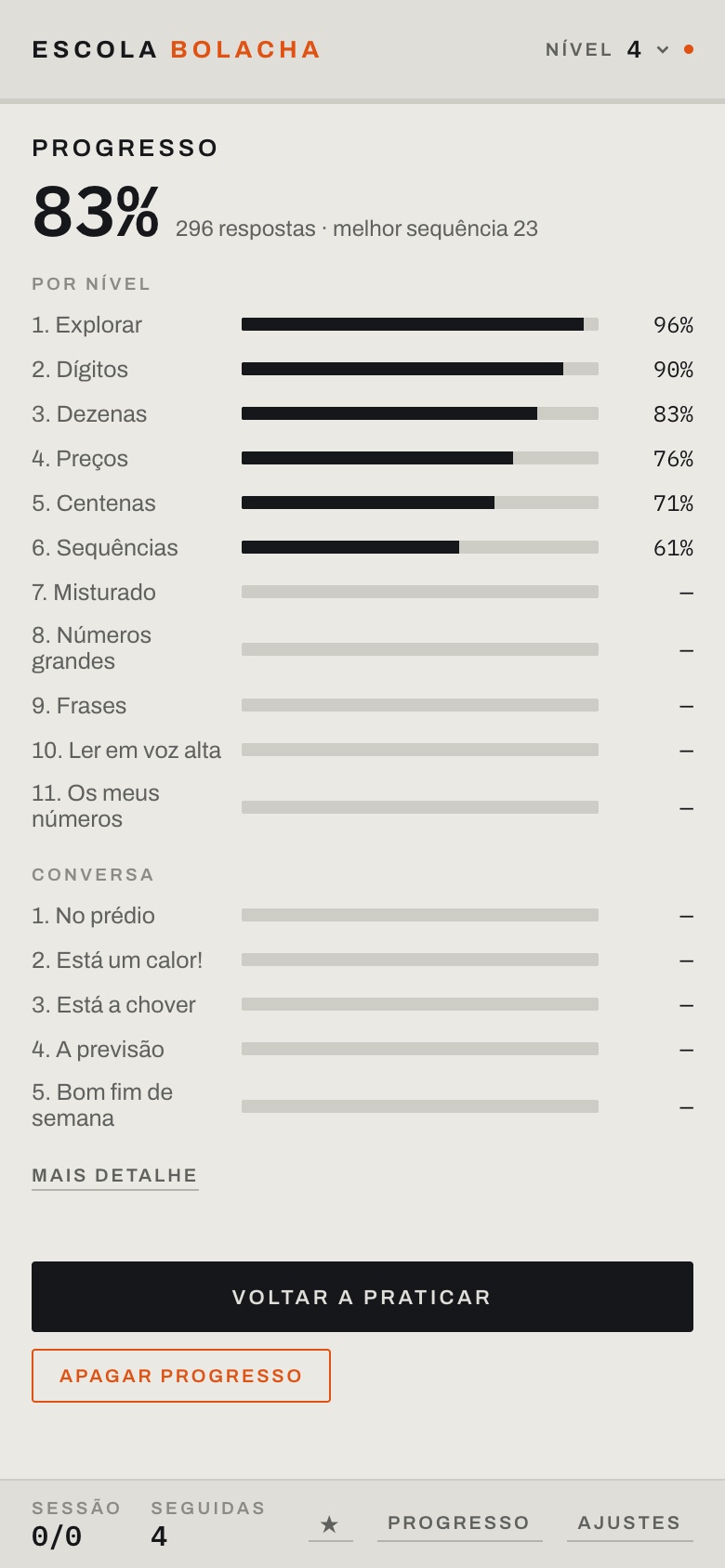
Screens from the app. The progress screen shows example data.
Why it’s different
A European Portuguese voice, chosen for you. Brazilian voices stay hidden unless you ask for them.
Supermarket prices with cents, phone numbers, dates, and full sentences at the higher levels.
It notices that you mix up seis and sete, and quietly gives you more of them.
No account and nothing to set up. Open it with your coffee and go.
What’s next
The next lessons go beyond numbers: the weather, the neighbours, booking a table. Want to know when they’re ready?
One email when it’s ready. Used for nothing else.
Not available yet. Would you pay for it? Leave your email and you’ll be first in, at an early price.
The free version stays free.